

Altus Traffic Wraps Up Their Role in the Sydney Gateway Project
The recent completion of the Sydney Gateway project marks a significant milestone in Australia's infrastructure landscape. This mega project, undertaken by the John Holland Seymour Whyte Joint Venture (JHSWJV), not only promises to revolutionise the accessibility of Sydney Airport but also sets a new benchmark in project management and execution. Among the key contributors was Altus Traffic, commencing work on the Sydney Gateway project in February 2021.
Altus Traffic's involvement in the Sydney Gateway was a colossal undertaking from the start. Over the course of the project, Altus Traffic inducted 200 staff and clocked approximately 230,000 man-hours. Notably, this project saw the first use of the Hybrid LTMA (Light Truck Mounted Attenuator) in Australia, also incorporating utes, drop decks, arrow boards, and PTCD Porta Booms to enhance traffic management and safety on-site, playing a pivotal role in maintaining seamless operations throughout the nearly four-year construction period. The efforts of the Altus Traffic team ensured that, despite regular 56-hour weekend possessions and the logistical hurdles presented by the Covid pandemic and subsequent supply chain shortages, the project moved forward without significant delays.
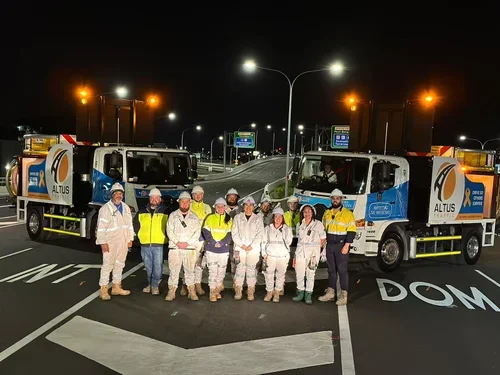
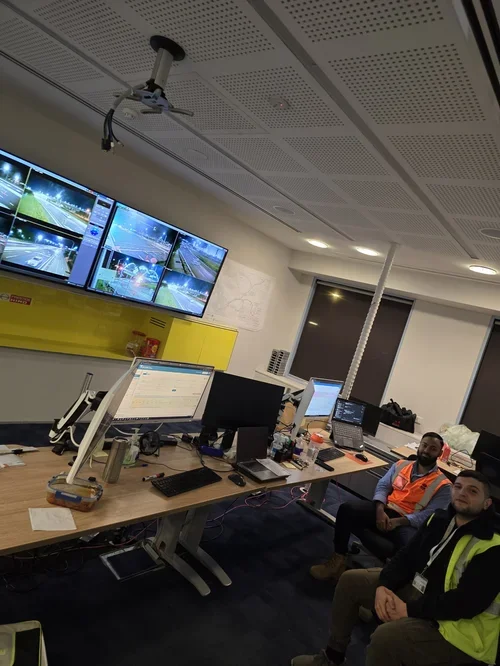
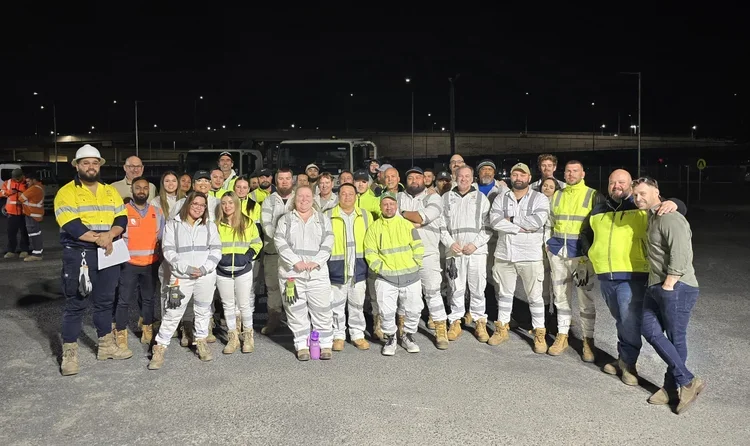
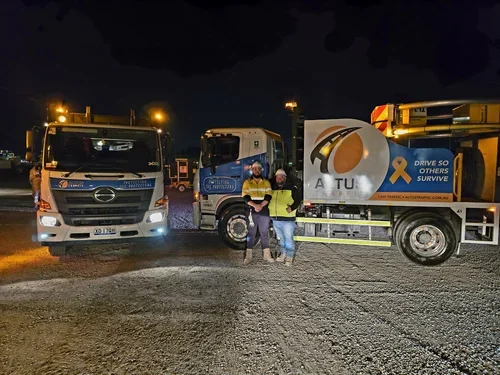
Eamon Mullan, Sydney Operations Manager at Altus Traffic, reflecting on the project's evolution, expressed a heartfelt sentiment: "Watching this project develop from its very beginning to its completion has been an unforgettable experience for our entire team. The exceptionally positive workplace culture was a direct result of everyone's dedication to fostering a spirit of camaraderie among all participants, whether they were part of the project for an hour, a month or for the 3.5 years."
Central to the success of Altus Traffic's operations on the Sydney Gateway was Nick Amone, the Altus Traffic Site Supervisor whose leadership and problem-solving skills earned him the moniker of a "unicorn" within the team. On the client side, key figures such as Andrew Deck (Project Director at Seymour Whyte Group), Lee Vossen (Regional Traffic Manager at Seymour Whyte), Adam Sardelic (Traffic Foreman at Seymour Whyte), and Joseph McInerney (Nightshift Superintendant) were instrumental in supporting and facilitating the needs of the Altus Traffic crew, ensuring safety and efficiency were maintained at all times.
As vehicles begin traversing the newly opened Sydney Gateway, the efforts of Altus Traffic and all who contributed to this project will be experienced by thousands daily. The success of the Sydney Gateway stands as a testament to what can be achieved with determination, underpinned by a strong culture of camaraderie and support.
Workzone Digitisation involves the strategic deployment of various smart assets aimed at reducing risks and improving safety in the work environment. Specific to the M5E site, the following digital technologies have been introduced and deployed for each closure:
Portable Site Alarms x 4 units
Cone Sensors x 50 units
Sentry Lidar Laser x 2 units
Intellitag Sign Tags x 17 units
These technologies enhance visibility, allow real-time condition monitoring, and provide immediate alerts in case of any breaches or risks in the worksite.
DETAILED IMPACT OF DEPLOYED TECHNOLOGIES
Portable Site Alarms: These alarms immediately notify traffic controllers and workers in case of unauthorised entry or threatening situations within the work zone, enabling rapid responses.
Cone Sensors: Real-time alerts and visual warnings are activated when cones are struck or moved. This ensures traffic controllers have maximum response time to relocate to safety.
Sentry Laser System: This lidar-based laser system creates virtual barriers, deterring unauthorised access around no-go zones, ensuring that drivers respect work zone boundaries.
Intellitag Sign Tags: creates a digital twin of all traffic management assets, allowing for continuous monitoring and instant alerts whenever an asset is compromised or displaced.
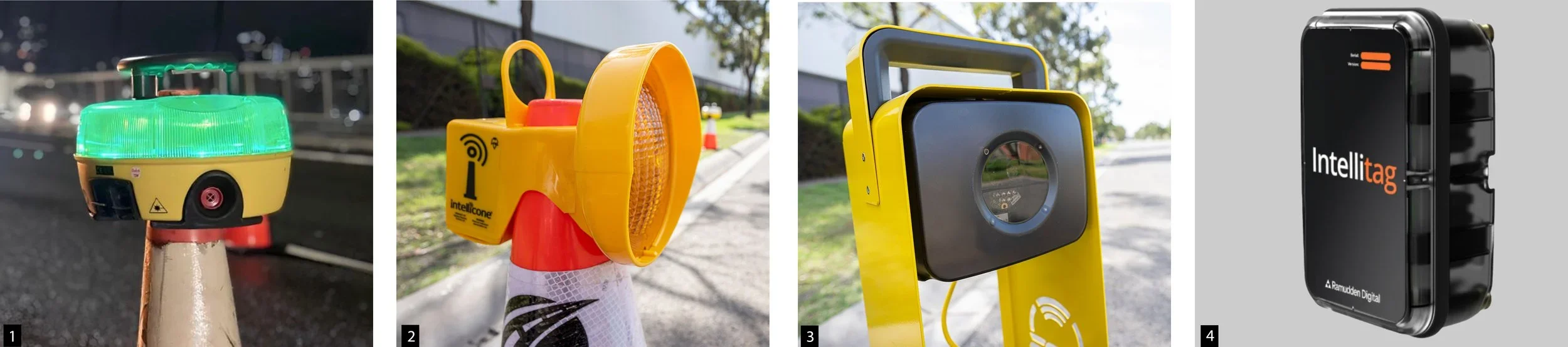
(1) Portable Site Alarm (2) Cone Sensors (3) Sentry Laser System (4) Intellitag Sign Tags
PERFORMANCE AND DATA INSIGHTS
Since introducing Workzone Digitisation on the M5E in April 2024, significant changes have been observed. Despite the imposition of speed limits, 74% of vehicles traversing the M5E work zone fail to comply with the posted speed restrictions, with average speeds exceeding the limit by 19 km/h (59 km/h).
Moreover, in 59% of digital deployments, cones placed within lane closures or tapers were struck, highlighting the persistent risks to road workers.
However, the introduction of smart assets has mitigated these risks. For example:
Work zones equipped with cone sensors reported average speed limit exceedances of 12 km/h less than sections without them, demonstrating the effectiveness of the digital equipment in slowing down drivers.
During 25 nights of deployment, 43 vehicles that breached the work zone were detected by the Sentry Laser system and safely exited the work zone without traffic controller interaction.
15 instances of cone strikes triggered immediate alarms, allowing workers to relocate to safety.
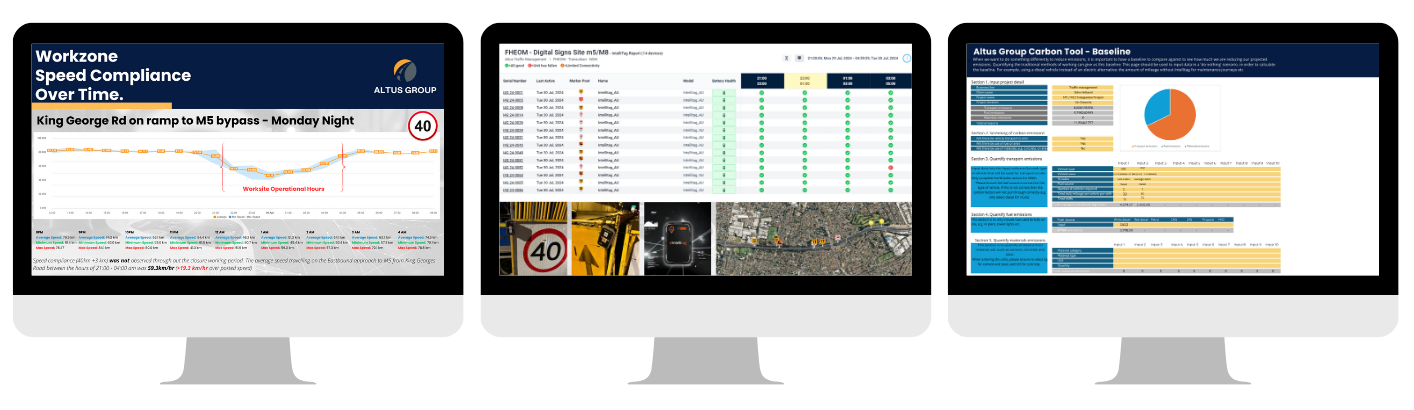
The MyWorkzone software application governs device monitoring and reactions, offering real-time insights, alarms, notifications, and historical data for complete transparency over site performance.
LESSONS FROM DATA COLLECTION
The data gathered from these deployments not only highlights the benefits of Workzone Digitisation but also reinforces the need for such technologies in high-risk areas. An internal review revealed that in 62% of recent near-miss reports across comparable sites, alarms would have activated and potentially prevented incidents had this digital equipment been in place.
The presence of digitised equipment acts as a deterrent, encouraging drivers to slow down and avoid entering the work zone, while real-time alerts improve response times and reduce risks for roadworkers.
The deployment of Workzone Digitisation on M5E has demonstrated the tangible benefits of using advanced technologies in Traffic Management. By combining smart assets, real-time monitoring, and proactive safety measures, the technology has successfully changed driver behaviour and significantly reduced the risk of workzone breaches.
This case study highlights a broader trend in the industry - the shift toward digitisation and data-driven safety protocols. As more infrastructure projects embrace these technologies, work zones will become safer, more efficient, and more resilient to the challenges of high-speed and high - risk traffic environments.
For Further Information:
- Find out more about the Workzone Digitisation system here.
- If you would like further information about Workzone Digitisation, please contact our Head of Digital, Beth Lilford at beth.lilford@altusgroup.com.au