

From Single Shift Trials to Project‑Wide Digitisation
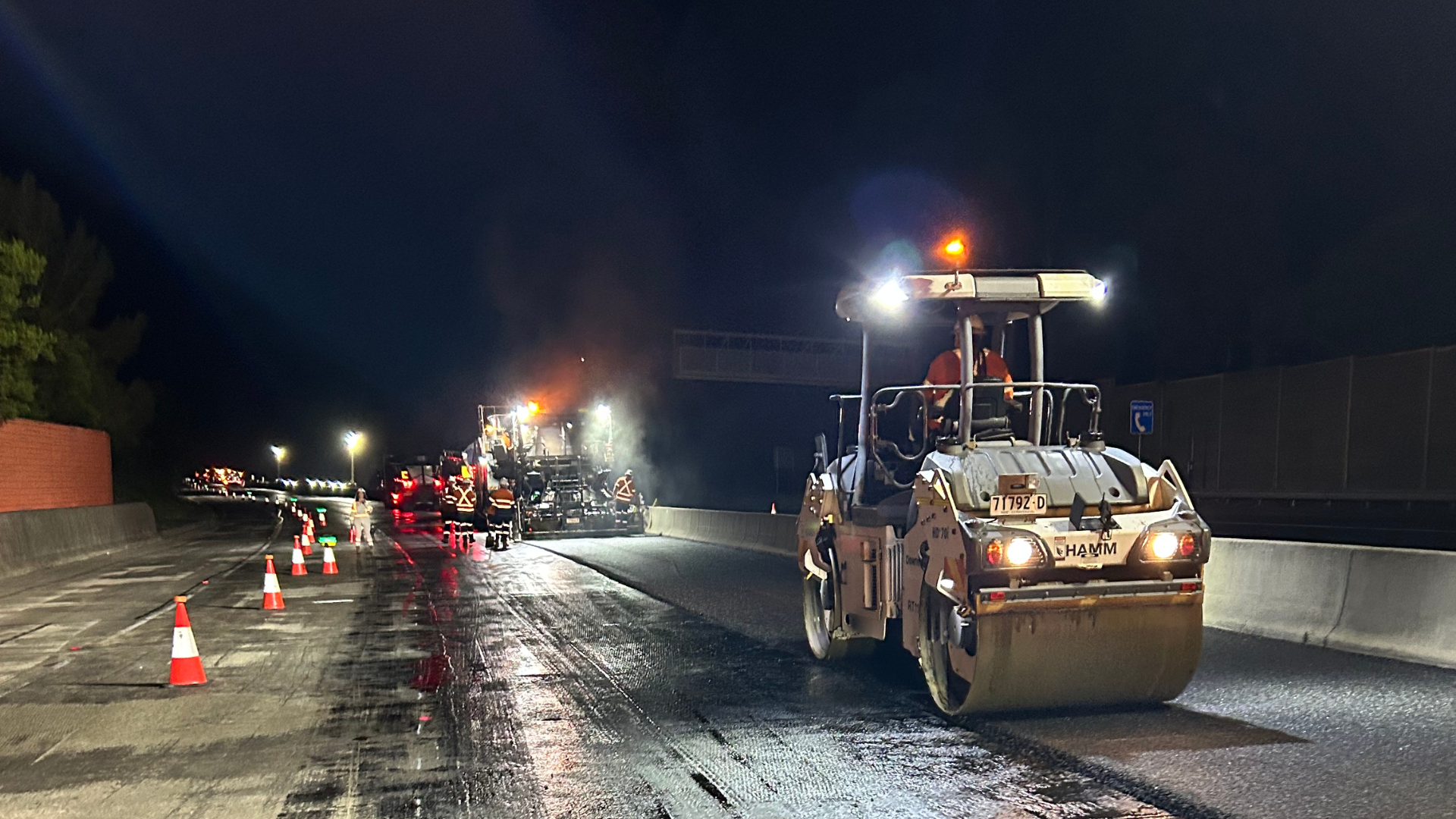
Location: M2 Motorway
City: Sydney
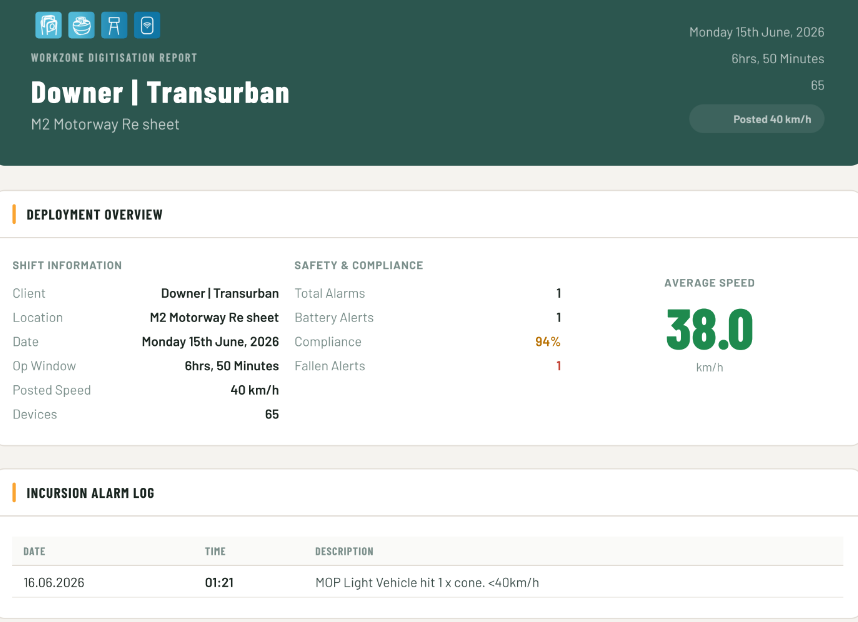
Client: Downer | Transurban
Dates: February 2026 - Ongoing
As infrastructure and maintenance projects grow in scale and complexity, the ability to see what is happening inside a live work zone has become just as important as the controls deployed around it. Since early 2026, Altus Group has been delivering Workzone Digitisation across a rolling program of night re-sheet and asphalt shifts for Downer | Transurban on the M2 Motorway. Rather than a single shift, this has been a sustained deployment, and that continuity has allowed us to do something a one-off snapshot cannot: observe how a worksite changes once it becomes fully visible.
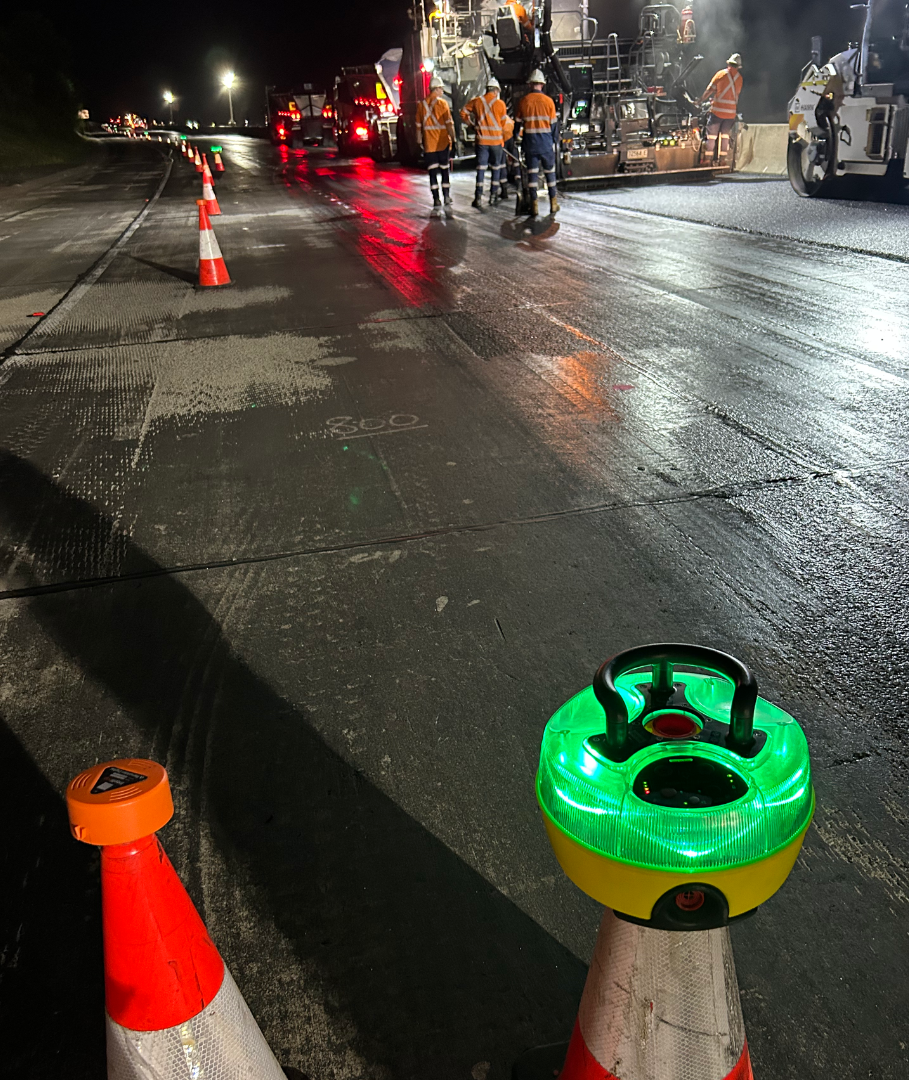
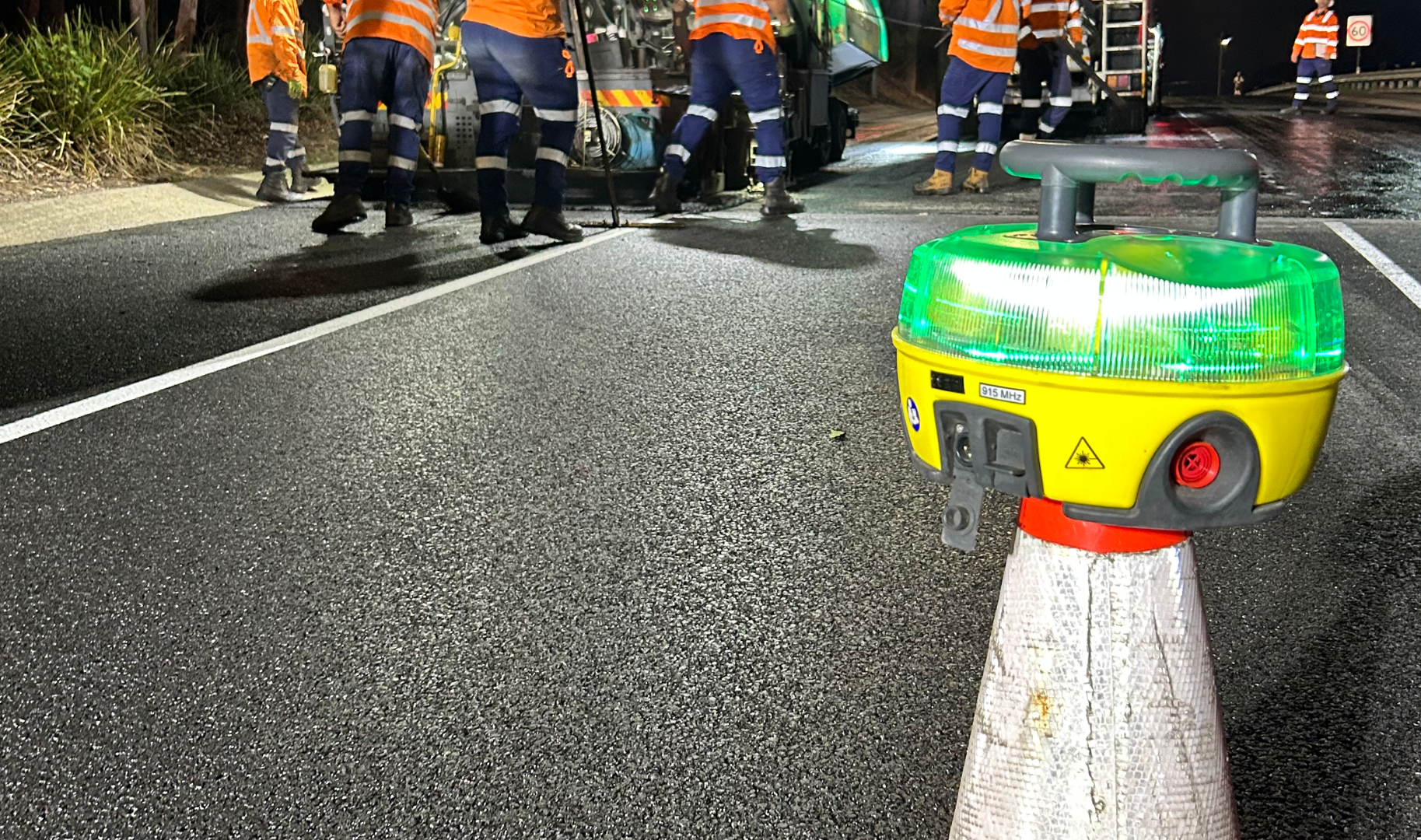
Workzone Digitisation integrates smart sensors, signage tracking and real-time analytics to create safer, more efficient roadwork environments. Across the M2 program, every shift has been instrumented with a network of connected devices, typically between 60 and 90 smart sensors per deployment, monitoring vehicle speeds, g-force and driver behaviour, cone and exclusion zone incursions, and the position and integrity of every temporary traffic management sign.
Compared with traditional manual inspection, a digitised work zone offers continuous, time-stamped evidence of exactly what occurred on site, when, and at what speed. That visibility is the heart of this case study. The technology did not simply confirm that controls were in place; it gave the project team an objective, shift-by-shift record they could act on, and over time, the data shows the site responding.
A Clearer View of the Worksite
The single most valuable outcome of the M2 deployment has been transparency.
Every shift now produces a complete digital record of traffic behaviour through the closure: average and 85th-percentile speeds, vehicle class breakdowns, g-force and braking events, incursion alarms with location and speed, signage uptime, and even the weather and risk conditions the crew worked under.
This turns conversations about a worksite from anecdote into evidence. Where a manual report might note that "traffic seemed to be travelling too fast," the digitised record quantifies it, maps it, and attributes it to a vehicle class and a moment in time. That same record is what allows trends to be identified across shifts, the insight a single inspection can never deliver.
Speed Compliance — A Measurable Shift
The clearest trend across the program has been a sustained reduction in work zone speeds against the 40 km/h posted limit.
In the earliest monitored shifts, pre digitisation, average speeds through the work zone frequently sat in the mid-50s km/h, with 85th-percentile readings climbing into the mid-to-high 60s and isolated maximum readings far higher. When Workzone Digitisation was deployed and the work zone became a known, monitored environment, average speeds settled into the high-30s to mid-40s, with the most recent shifts recording averages consistently in the low 30s.
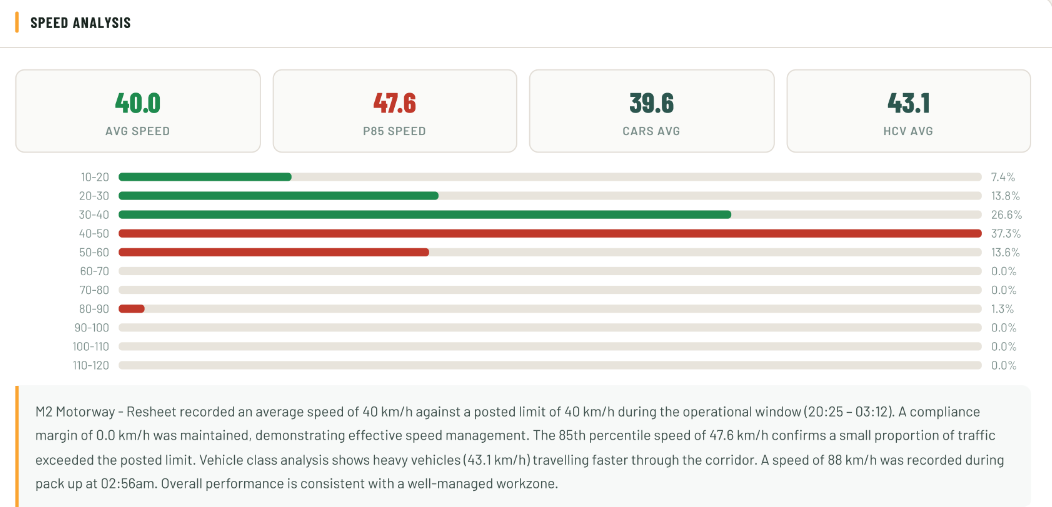
Pre Digitisation: average work zone speeds of approximately 57–68 km/h across the upper band of traffic.
Recent shifts: average work zone speeds of approximately 37–45 km/h, with several of the latest shifts averaging in the low 30s, comfortably under the posted limit.
Vehicle dynamics: g-force readings have remained in the Low / Safe range across every shift, consistent with calm, controlled driving rather than harsh braking or evasive manoeuvres.
What made this trend visible, and therefore actionable, was continuous measurement. Instead of relying on spot observations, the project team had an objective, shift-by-shift record of speed across the entire corridor.
That visibility is the benefit. It surfaced exactly where and when non-conformance was occurring, allowed the team to respond with targeted changes on site, and then provided the evidence to confirm those changes were working as speeds came down. The same monitoring also flags atypical shifts the moment they happen, so any deviation from the established pattern is identified and reviewed rather than going unnoticed.
Incursion Detection & Awareness
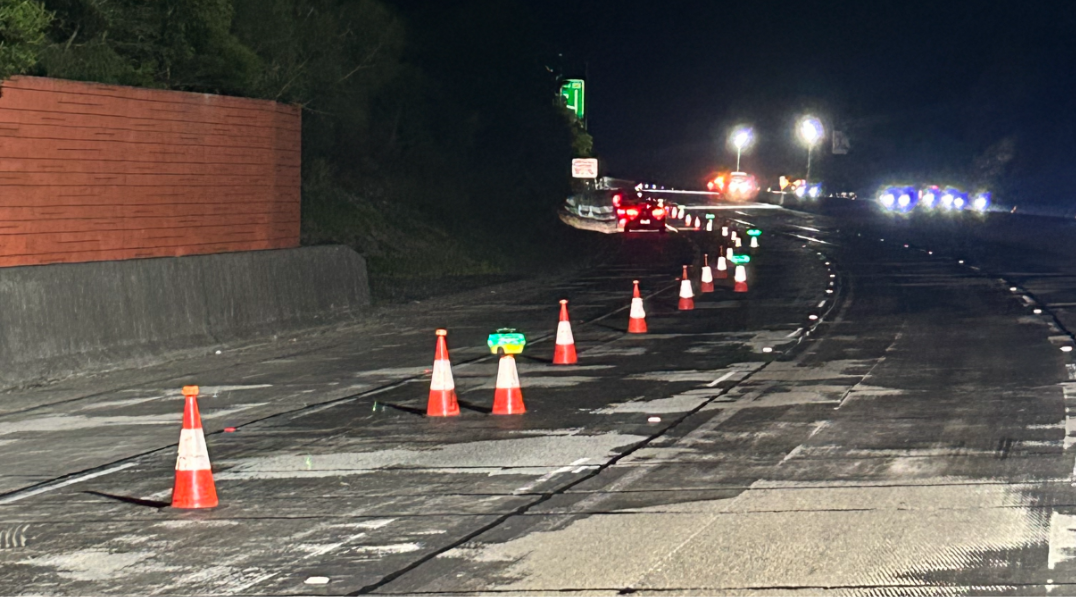
Incursion alarms notify traffic controllers the instant a cone or sensor is struck, capturing the speed, location and direction of the contact. Across the M2 program these alarms have built a clear, attributable picture of the external traffic that came into contact with the closure, turning each event into a reviewable record rather than a moment that passes unseen.
The events worth calling out are the higher-risk external incursions, and they are precisely the ones that justify real-time monitoring:
On one occasion, a member of the public struck cones at the end of the worksite at close to 59 km/h, an event flagged as a near miss by the combined speed and g-force data.
On another occasion, a light vehicle struck a cone in close proximity to workers on foot, exactly the scenario where an instant alert gives a crew the seconds they need to move to safety.
A Heavy Vehicle struck 4 x cones, travelling at 68 km/h, workers on foot having a clearance of > 30m
On one shift, a vehicle accessed the closure outside the monitored digital line, prompting a separate incident investigation. This is an important point of transparency: the digital record showed both what the system detected and the surrounding context, helping the team understand the full picture rather than a partial one.
Critically, this kind of evidence drove a real change on site. Because the monitoring showed that a large portion of non-conformance was concentrated at the end of the work zone, where some vehicles had commenced to increase their speed, the decision was made to extend the work zone by an additional 100 metres. This moved that residual non-conforming behaviour outside the defined work area, creating a buffer so that any vehicle still adjusting its speed was doing so away from workers rather than alongside them. It is a clear example of the data-to-action loop: an issue made visible by the monitoring, addressed through a targeted operational change, with the ongoing record available to confirm the improvement.
In each case the system delivered an immediate, attributable alert. Had any of the public incursions involved an errant driver entering an active work area, that early notification would have been critical in allowing workers to react.
Signage Integrity & On-Site Efficiency
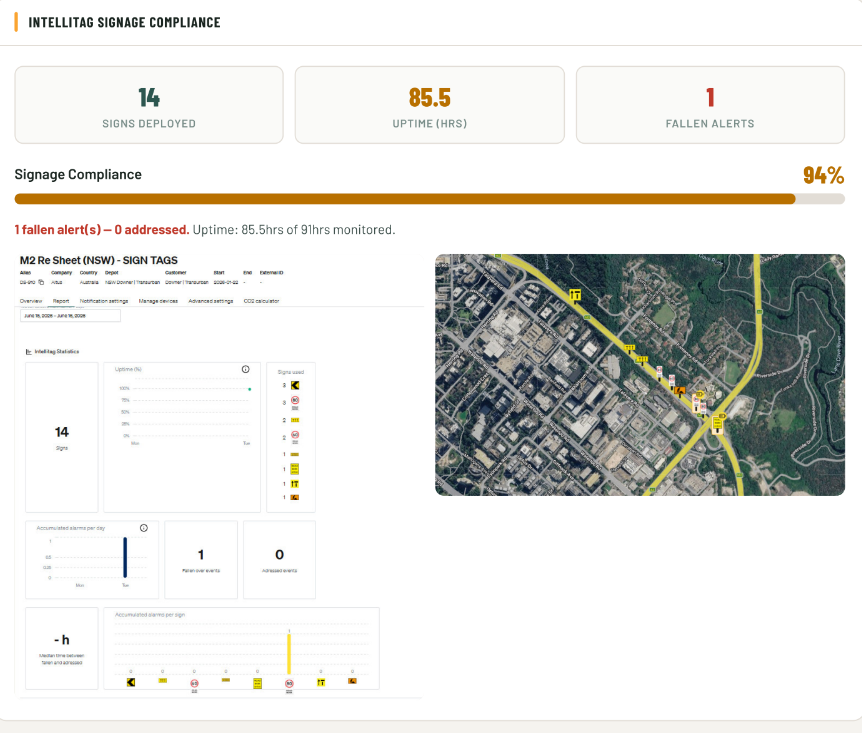
Using Intellitags on every temporary traffic management sign, the program has maintained continuous visibility of signage position and function, with compliance recorded consistently between 92% and 100% across shifts, and 100% on the majority of deployments. Where a sign has fallen, the event-based notification system has identified it immediately and allowed prompt reinstatement, without a crew member needing to drive the corridor to discover it.
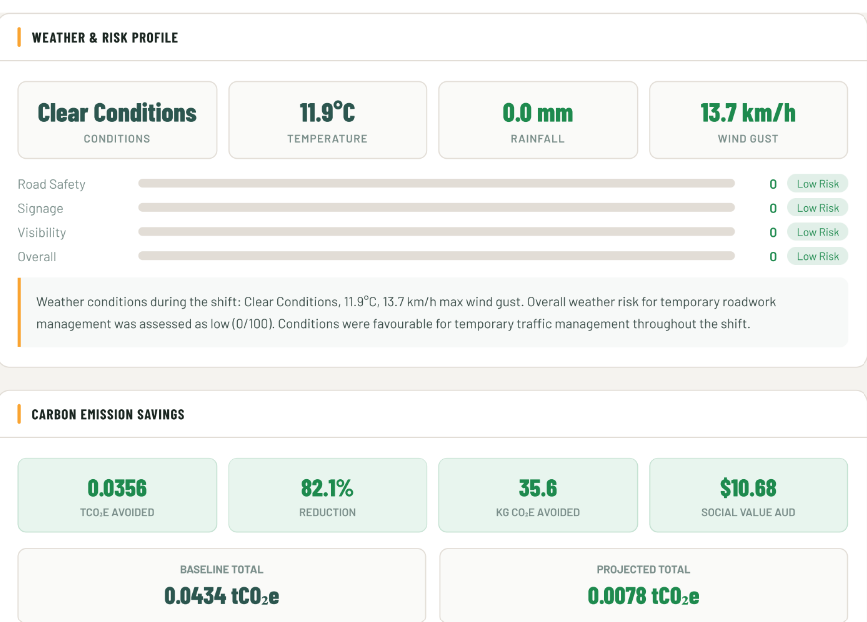
This event-based approach has delivered a substantial environmental and efficiency dividend. By responding only when a sign actually requires attention, rather than running scheduled manual patrols, signage-check travel has been dramatically reduced, in some shifts from over 45 km down to single-digit kilometres, and in others eliminated entirely where no fall events occurred. Across individual shifts this has translated into carbon savings ranging from a few kilograms to over 32 kg of CO₂e per shift, with emissions reductions of up to 93–100% against the manual-patrol baseline.
The benefit compounds across a long program: fewer vehicle movements, less road-worker exposure to live traffic, and a verifiable sustainability outcome that can be reported back to the project.
The Value of a Transparent Work Zone
The M2 Downer | Transurban program demonstrates what Workzone Digitisation delivers when it is used continuously rather than as a one-off: a worksite you can genuinely see, measure and improve.
Over the course of the deployment, average speeds through the closure have fallen from the upper bands of traffic into consistent compliance with the posted limit; driver behaviour has remained calm and controlled throughout; every incursion, including several genuine near misses, has been captured, attributed and logged; and where the data revealed a risk, such as non-conformance concentrated at the end of the work zone, the site was physically adjusted in response. Signage has been monitored without putting crews on the road to check it, and the project has accrued a measurable carbon and efficiency benefit along the way.
Most importantly, decisions on the M2 are now informed by evidence. That awareness, the ability to know rather than assume what is happening inside a live work zone, is what makes the site safer for the people working in it.
For Further Information:
- Find out more about the Workzone Digitisation system here.
- If you would like further information about Workzone Digitisation, please contact our Head of Digital, Beth Lilford at beth.lilford@altusgroup.com.au